
Ecommerce 4PL vs. 3PL: What’s the difference?
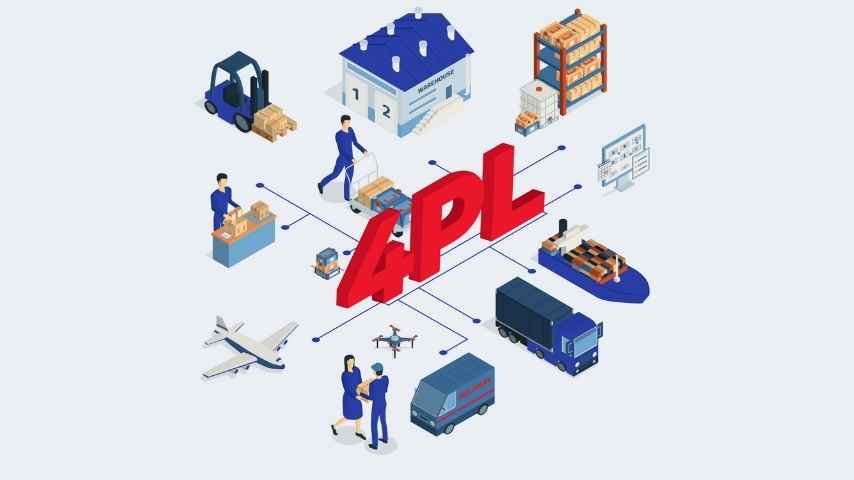
In the hyper-competitive world of ecommerce, speed, efficiency, and customer experience are everything. While you focus on product development, marketing, and building your brand, a complex web of logistics operates behind the scenes. Managing inventory, warehousing, shipping, and returns can quickly become a full-time job, distracting you from growth.
Many businesses turn to a 3PL (Third-Party Logistics) provider to handle the physical tasks. But what happens when your operations become so complex that you need more than just execution? What if you need a strategic partner to manage and optimize your entire supply chain?
Enter the ecommerce 4PL.
This guide will demystify the concept of fourth-party logistics, explain its critical role in modern ecommerce, and draw a clear comparison between the 3PL and 4PL models to help you decide which is right for your business.
What Exactly is a 4PL (Fourth-Party Logistics)?
A Fourth-Party Logistics (4PL) provider, also known as a Lead Logistics Provider (LLP), is a strategic partner that manages your company's entire supply chain.
Think of it this way:
- If a 3PL is the "doer"—the company that physically warehouses your products, picks and packs orders, and ships them—then a 4PL is the "architect" or "general contractor."
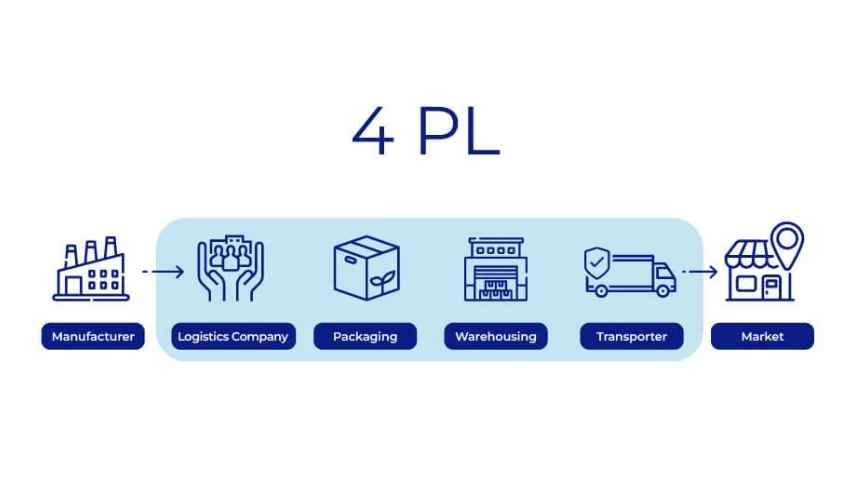
A 4PL doesn't typically own physical assets like warehouses or trucks. Instead, its primary role is to design, build, and run a comprehensive supply chain solution for its client. They act as a single point of contact, managing and integrating technology, resources, and even multiple 3PLs to create a seamless and optimized logistics network.
Key functions of a 4PL include:
- Strategic Logistics Planning: Analyzing your business goals and designing the most efficient supply chain network.
- Technology Integration: Implementing and managing a unified technology platform for total visibility (from inventory to last-mile delivery).
- Vendor Management: Selecting, negotiating with, and managing the performance of 3PLs, freight carriers, and other vendors.
- Data Analysis & Optimization: Continuously analyzing performance data to identify inefficiencies, reduce costs, and improve service levels.
The Core Difference: 3PL vs. 4PL for Ecommerce
While both models aim to streamline logistics, their approach and scope are fundamentally different. The core distinction lies in their focus: a 3PL is concerned with tactical execution, while a 4PL is centered on holistic, long-term supply chain strategy and optimization.
A 3PL provider acts as a hands-on, tactical partner you hire to perform specific operational tasks. They often own physical assets like warehouses and delivery fleets, and their primary role is to manage day-to-day logistics, such as storing your inventory, fulfilling orders, and handling shipping. The relationship is typically transactional; they are a vendor you hire to provide a defined service. With a 3PL, you are still the manager, responsible for overseeing their performance and coordinating with other vendors if needed.
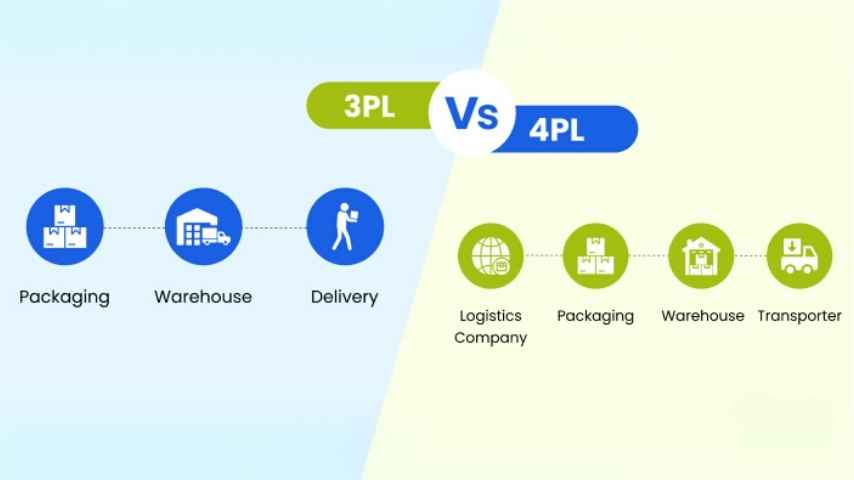
In sharp contrast, a 4PL operates on a strategic level, acting as the architect and manager of your entire supply chain. A 4PL is typically "asset-neutral," meaning it doesn't own the warehouses or trucks but instead selects, coordinates, and manages the best providers (including multiple 3PLs) on your behalf. This elevates the relationship from a simple transaction to a deep, strategic partnership, where the 4PL acts as an extension of your team. By providing a single point of contact and accountability, a 4PL integrates all disparate parts—technology, various vendors, and data—into one cohesive and optimized system, giving you a level of visibility and control that is difficult to achieve when managing logistics partners on your own.
Why Should an Ecommerce Business Consider a 4PL?
As your ecommerce business scales, complexity grows exponentially. A 4PL model becomes increasingly attractive for ambitious brands seeking a competitive edge. Here are the main benefits:
1. Unparalleled Strategic Oversight
A 4PL provides a bird's-eye view of your entire operation. They don't just ship boxes; they analyze data to optimize inventory placement, reduce shipping costs, and improve delivery times, directly impacting your bottom line and customer satisfaction.
2. Greater Scalability and Flexibility
Want to expand into a new country? A 4PL can quickly assemble the necessary logistics network by vetting and integrating local partners. Facing a massive seasonal spike? They can orchestrate multiple fulfillment centers to handle the surge without you lifting a finger.
3. A Single Source of Truth and Accountability
Instead of juggling communications between a warehouse in Texas, a freight carrier in Europe, and a returns processor in California, you have one partner and one integrated system. This simplifies communication, streamlines problem-solving, and gives you complete visibility through a single dashboard.

4. Focus on Your Core Business
Logistics is a complex field. By outsourcing its strategic management to a 4PL, you and your team are free to concentrate on what you do best: developing great products, building a strong brand, and connecting with your customers.
When is a 4PL the Right Choice for Your Business?
A 4PL isn't for every business. Startups or small businesses with simple supply chains are often well-served by a reliable 3PL. However, it's time to consider an ecommerce 4PL if you find yourself in one of these situations:
- You are scaling rapidly: Your order volume is growing, and you plan to enter new national or international markets.
- Your supply chain is becoming too complex: You're already using multiple 3PLs, carriers, and systems, and managing them is becoming a major headache.
- You lack visibility and control: You can't easily track inventory across locations or get a clear picture of your total logistics costs.
- You want to be more strategic: You're ready to move beyond just "getting orders out the door" and want to use logistics as a competitive advantage.
Conclusion: From Tactical Support to Strategic Partnership
Choosing a logistics partner is one of the most critical decisions an ecommerce brand can make. A 3PL provides the essential hands-on services needed to fulfill orders and is a perfect solution for many businesses.
However, for growing companies with complex needs and global ambitions, an ecommerce 4PL represents the next evolution. It transitions logistics from a cost center into a strategic driver of growth, efficiency, and customer delight. By entrusting the entire ecosystem to an expert manager, you unlock the freedom to focus on building your empire, confident that your supply chain is not just running—it's optimized.