
Optimize ecommerce URL structure for higher rankings and conversions

This paragraph highlights the critical role of the ecommerce URL in today’s highly competitive digital marketplace. While businesses often focus on product images, ad campaigns, and copywriting, they frequently overlook the power of a clean, optimized URL structure. A well-crafted ecommerce URL is easy to read, trustworthy, and SEO-friendly—helping both users and search engines understand your content. In contrast, a messy URL can damage credibility and search rankings. Getting your ecommerce URL right is a strategic move that directly impacts visibility, usability, and long-term success.
Why Your Ecommerce URL Structure Is a Critical Business Asset
Before we dive into the "how-to," let's solidify the "why." A well-thought-out URL strategy directly benefits three core pillars of your online business.
1. SEO (Search Engine Optimization): Speaking Google's Language
Search engine crawlers are incredibly smart, but they appreciate clear signals. An SEO-friendly URL is one of the most direct signals you can provide.

- Context and Relevancy: A URL like /mens-apparel/cashmere-sweaters/crewneck-charcoal-grey instantly tells Google what the page is about. This context helps Google rank your page for relevant search queries.
- Ranking Factor: While not the most heavily weighted factor, keywords in the URL are a confirmed, albeit small, ranking signal. Every bit helps in a competitive niche.
- Crawlability: A logical URL structure helps search engines understand the hierarchy of your site, allowing them to crawl and index your pages more efficiently and discover new products faster.
2. User Experience (UX): Building Trust and Clarity
Humans read URLs, and their subconscious reaction matters. A clean URL acts as a mini-breadcrumb trail, orienting the user and building confidence.
- Trustworthy:
- Good: https://www.yourstore.com/skincare/anti-aging/vitamin-c-serum
- Bad: https://www.yourstore.com/store/sec/p?prodID=9c4a-21&cat=sk-a2
- The first URL is transparent and professional. The second looks like a mess of database code, which can make users hesitant to click, share, or enter payment information on your site.
- Shareability: Clean URLs are easy to copy, paste, and share on social media, in emails, or on forums. They look clean and are self-explanatory, increasing the likelihood that someone will click the link.
3. Click-Through Rate (CTR): Winning the Click in Search Results
When your page appears in Google search results, the URL is displayed right below the title. It's another piece of information a user processes before deciding whether to click.
Imagine a user searches for "men's waterproof hiking boots." They see two results:
- Title: Best Men's Waterproof Hiking Boots - YourStore
https://www.yourstore.com/footwear/mens/waterproof-hiking-boots - Title: Hiking Boots For Men On Sale Now - AnotherStore
https://www.anotherstore.com/view/product.php?item=48A2B
The first URL reinforces the search query and promises an exact match, making it far more compelling to click on. This can significantly improve your organic CTR.
The Anatomy of a Perfect Ecommerce URL
An optimized URL is a sum of its parts. Let's break down the ideal structure:
https-protocol:// + your-domain.com + /category-folder/ + product-slug
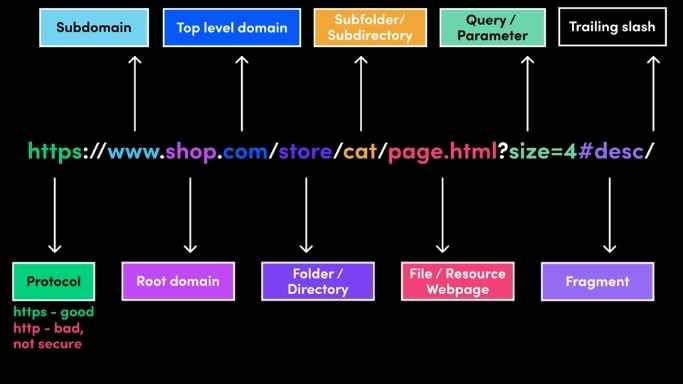
- Protocol: Always https://. The 'S' stands for 'Secure,' and it's an absolute must-have for any ecommerce site. It encrypts user data, is a confirmed Google ranking factor, and is required for modern payment gateways.
- Domain: Your memorable brand name (e.g., yourstore.com).
- Folder/Category: This part shows the site hierarchy (e.g., /home-goods/, /lighting/). It organizes products into logical groups for both users and search engines.
- Slug: This is the most specific part of the URL, identifying the individual product or category page (e.g., /industrial-floor-lamp). This is your prime real estate for the page's primary target keyword.
10 Best Practices for Crafting SEO-Friendly Ecommerce URLs
Ready to optimize? Follow these ten rules to build a URL structure that search engines and customers will love.
1. Keep URLs Short, Simple, and Descriptive
The first and most fundamental principle is clarity through brevity. A short, simple, and descriptive URL not only looks professional but makes it easier for customers to remember and share. Consider the cognitive load of reading a long, cluttered link. A user seeing a URL like yourstore.com/electronics/laptops/apple-macbook-pro-14-inch-m1 immediately understands what to expect. On the flip side, something like yourstore.com/category/mens-apparel/fall-winter-collection/xyz12345 isn’t just confusing—it might even get cut off in search engine results, hiding the most valuable keywords. In today’s age of voice search and fast interactions, clarity is currency.
2. Include Your Target Keyword
Your URL should always incorporate the target keyword. This isn’t just a nice-to-have—it’s a direct signal to search engines about what your content is about. When someone searches for "black merino wool sweater" and sees that exact phrase reflected in your link, it reassures them that they’re on the right track. Plus, if someone links to your page using just the raw URL, having those keywords there gives you SEO value from the link itself.

3. Use Hyphens Instead of Underscores
The mechanics of URL structure also matter. Hyphens, not underscores, should separate words. This might seem like a minor technicality, but Google sees "merino-wool-sweater" as three distinct terms, while "merino_wool_sweater" is viewed as one indecipherable string. This small change can make or break your chances of ranking for a key phrase. It’s worth auditing your entire site to catch and correct any outdated formatting like this.
4. Make URLs Logical and Easy to Read
URLs should also be easy to read and logically structured. A well-organized path—such as yourstore.com/footwear/womens/sandals—instantly communicates where a user is within your site’s hierarchy. This builds user trust and allows advanced users to intuitively navigate up a level just by trimming the URL. That kind of intuitive navigation not only improves UX but reflects well on your brand.
5. Remove Stop Words for Conciseness
Equally important is removing stop words like "a," "an," "the," and "for." These filler terms add no semantic value and only make URLs longer. Replacing "a-jacket-for-the-winter" with "winter-jacket" tightens your URL and sharpens its focus. However, if removing a stop word makes the URL confusing or less natural, it’s okay to keep it—use your judgment.
6. Stick to Lowercase Letters
Standardizing all URLs in lowercase is another overlooked yet critical practice. Many servers, particularly Linux-based ones, treat uppercase and lowercase URLs as distinct. This can result in duplicate content issues, splitting your SEO efforts across multiple variants of the same page. Enforce lowercase URLs across your CMS and implement redirects for any uppercase variants that slip through.
7. Avoid Dynamic Parameters and IDs
Avoid dynamic parameters wherever possible. While necessary in some technical setups, URLs filled with query strings like ?category=2&product_id=105 look messy and untrustworthy. They also generate countless URL variations that can overwhelm search engines with redundant pages. Instead, opt for clean, static URLs like yourstore.com/shoes/leather-boots. Most modern platforms support this with a toggle for “SEO-friendly” URLs.
8. Build a Sensible Folder Structure
A sound folder structure is essential for long-term scalability. Flat structures might work for a site with ten products, but as your inventory grows, things can spiral out of control. Organize your URLs into logical categories—domain.com/category/product-name is a solid, scalable format. Going too deep, like /department/category/sub-category/product, may dilute your SEO value and confuse users.
9. Use Canonical Tags to Handle Duplicates
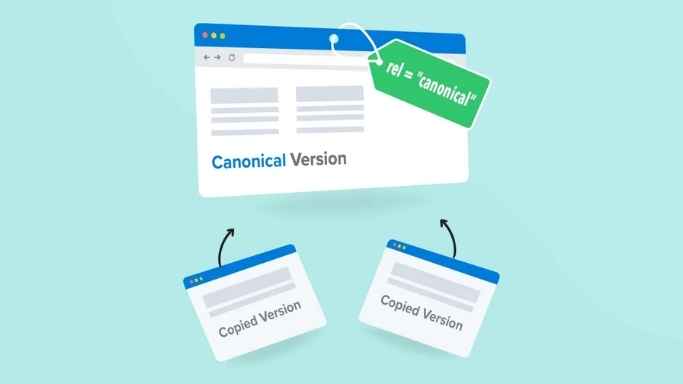
Since duplication is a recurring issue in ecommerce—thanks to category sorting, filtering, and tracking codes—using canonical tags is non-negotiable. These tags point to the preferred version of a page, consolidating ranking signals and preventing Google from guessing which variant to prioritize. This one step can eliminate internal SEO cannibalization.
10. Redirect Old URLs with 301s
Finally, if you ever change a URL, don’t simply delete the old one. Always implement a 301 redirect from the original URL to the new one. This ensures you preserve the accumulated link equity and offer a seamless user experience. Map your old and new URLs carefully, then use your platform’s redirect manager or server-side tools to handle the rerouting. It’s a crucial part of protecting your SEO investments.
In sum, crafting strong ecommerce URLs is a blend of technical discipline and user-centric thinking. Each practice—from keyword inclusion to canonical tagging—builds a more trustworthy, crawlable, and shareable site. And in a competitive online landscape, those details can make all the difference.
Conclusion: Your URL is Your Digital Signpost
Your ecommerce URL structure is far from a minor technical detail—it's a core component of your SEO foundation and a crucial element of the customer journey. By keeping your URLs short, readable, and keyword-rich, you create clear signposts that guide both search engines and shoppers directly to your products.
Take the time to audit your current URLs and apply these best practices moving forward. It’s a simple but high-impact change that can lead to better rankings, higher click-through rates, and a more trustworthy brand experience.